


|
Getting your Trinity Audio player ready...
|
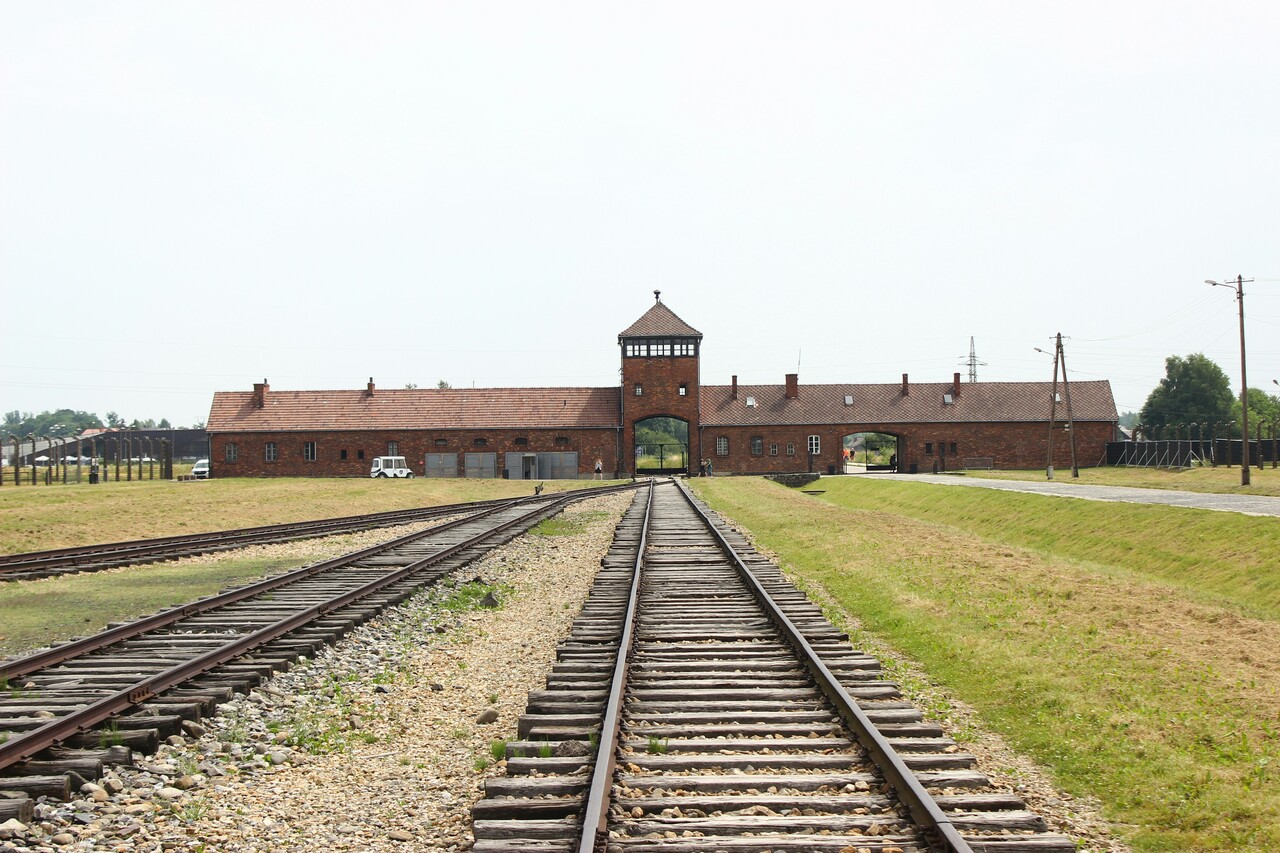
People from all over the world have visited Auschwitz, a sprawling complex located in the Polish town of Oświęcim that the Nazis used as a concentration and extermination camp during World War II.
Its name has become synonymous with the Holocaust and for man’s capacity for depravity.
I’ll always remember my visit to this haunting facility during my working holiday in Europe some years ago.
I was living and working in Dublin, Ireland, and after about five months in one particular job I decided to undertake some solo travel around Europe.
I went by aircraft, train, and bus through England, Scotland, Wales, Northern Ireland, Norway, Germany, Poland, Hungary, Austria, the Czech Republic and France.
It was while staying at the Tutti Frutti backpackers’ hostel in Krakow, Poland, that I decided to take part in a guided group tour of Auschwitz.
I’d seen the Oscar-winning 1993 Steven Spielberg film Schindler’s List and can remember many of the scenes of Auschwitz’s prisoners being beaten, killed, and robbed of their property, dignity and freedom.
It’s just a short bus or train trip from Krakow to Auschwitz, and before the tour began it was made clear we were to observe the solemnity of the site and act with respect, which led to some sideways glances when one member of our tour group kept taking calls on her mobile phone.
Several things I saw during the group tour of the complex were memorable for all the wrong reasons.
In one building we were shown exhibits that contained huge piles of the belongings of people imprisoned at Auschwitz and which had been confiscated from them upon arrival.
They included suitcases, shoes and eyeglasses, and even human hair cut from the heads of inmates.
Seeing these exhibits really makes the solemnity of the site hit home, as these aren’t just random objects; they’re historical artefacts once owned by real people who were murdered.
We were also shown the grim “starvation cell”, in which inmate and Polish Franciscan friar Saint Maximilian Kolbe and other men were held without food and water until their deaths.
The third location that’s still hauntingly memorable all these years later is the gas chamber, which has been largely preserved from its original state.
We were able to enter it, which is something no visitor would ever forget.
The space didn’t seem particularly small, but if you were trapped in there, it would be beyond claustrophobic, and it’s impossible to imagine how terrified the victims would have been in the moments before death.
A visit to Auschwitz is something everyone who’s able to should undertake at least once in their lifetime, even if just to give us perspective about how short life is and how important it is to stop evil in its tracks when we can.