


|
Getting your Trinity Audio player ready...
|
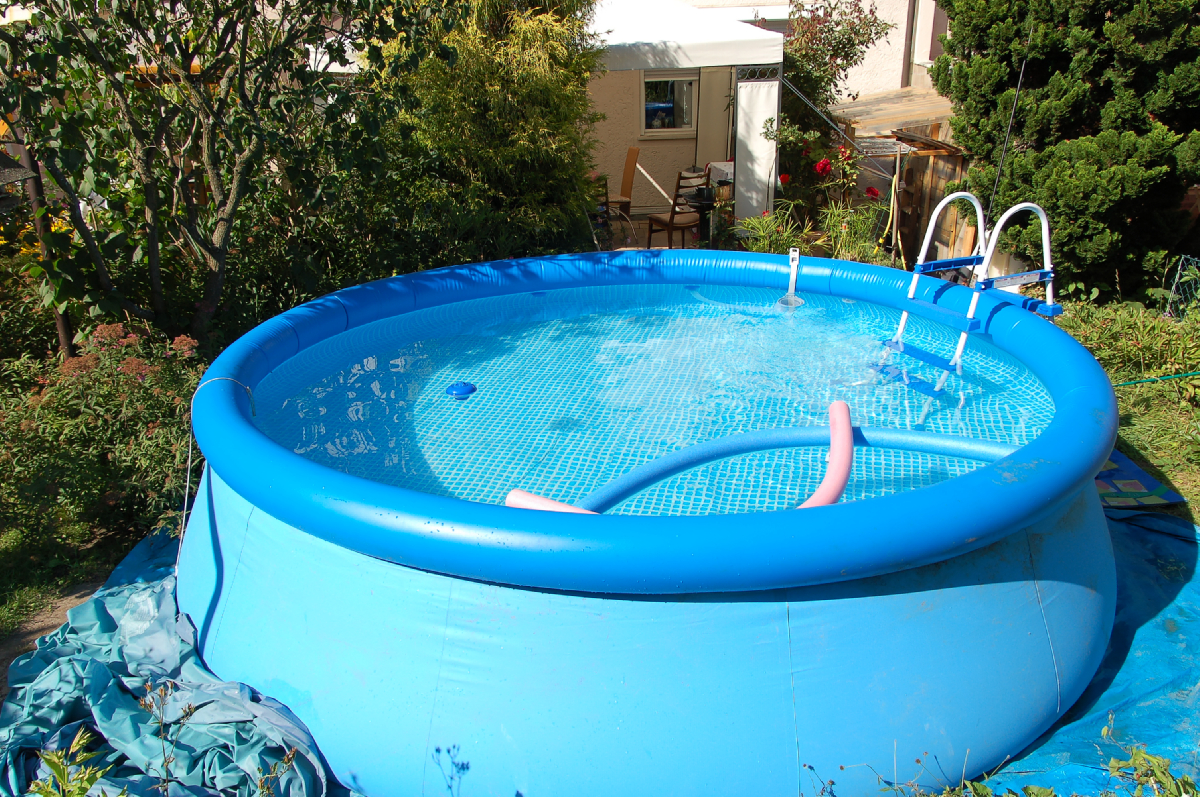
A coroner has renewed calls for portable swimming pools to be banned following the drowning of a 10-month-old baby in Pukekohe. But the Government agency responsible for pool safety says such a change is unlikely.
Ten-month-old Majura Rapi-Davis died on Boxing Day 2022 after entering a portable inflatable pool at his family’s home. The pool contained only about 320 millimetres of water, roughly the height of a standard school ruler.
In findings released by the Coroner’s Court, Associate Coroner James Buckle said the design of the soft-sided pool meant it could collapse inward when weight was placed on it, making it difficult for a child to climb out.
“Because the top of the pool collapsed in when weight was put on it but did not collapse out, Baby Majura was not able to climb out without help,” Buckle said.
The coroner said Majura’s parents had been diligent in supervising the pool while it was being used and had attempted to restrict access at other times. However, in a busy household with several other children, the sliding door that formed part of the barrier to the pool area was left open at one point.
“The death of Baby Majura was a tragic loss and I extend my heartfelt condolences to his whānau,” Buckle said.
Buckle noted the case was not the first involving a child drowning in a temporary pool and supported earlier recommendations by Coroner Michael Robb that portable pools under 1.2 metres high should be discontinued from sale.
“The cost of these pools has become the lives of children,” Buckle said.
However, the Ministry of Business, Innovation and Employment (MBIE) signalled that banning the pools is unlikely.
“The tenor of MBIE’s response to both my and Coroner Robb’s recommendations were that they are very unlikely to be followed in the short to medium term, if ever,” Buckle said.
MBIE told the court that discontinuing the sale of temporary pools below 1.2 metres in height would require significant policy work and may not be as straightforward as it appears.
Because of this, Buckle also recommended changes to how portable pools are marketed and sold.
He said promotional images and advertising should only show pools set up in ways that clearly comply with safety legislation, including fencing requirements. Packaging should also clearly state that required safety barriers are not included with the pool.
In a statement on March 5, 2026, Water Safety New Zealand says the risks posed by portable pools remain significant.
Water Safety New Zealand’s Gavin Walker says the pools are often purchased as a low-cost option but are frequently left unfenced and filled with water.
“Two children under the age of five have already drowned in portable pools in the first two months of this year. This problem did not exist a decade ago,” he said.
“Buyers typically do not budget for, or anticipate the real need for appropriate fencing, leaving children at serious risk of drowning,” Walker said.
Walker said drowning deaths of young children in home pools were once a major issue in New Zealand, with an average of 8.8 children dying each year in the 1980s before the introduction of the Fencing of Swimming Pools Act 1987.
While fencing laws significantly reduced those deaths, Walker said the rise of inexpensive portable pools has created a new safety challenge.
“Over the past decade, cheap portable pools have become easily available and are being used without safety fencing in properties across New Zealand,” he said.
“Any unfenced pool is a tragedy waiting to happen. A split-second distraction can have devastating implications for our youngest and most vulnerable.”
Water Safety New Zealand has welcomed the coroner’s recommendations and continues to advocate for stronger regulation to prevent further avoidable drownings.