


|
Getting your Trinity Audio player ready...
|
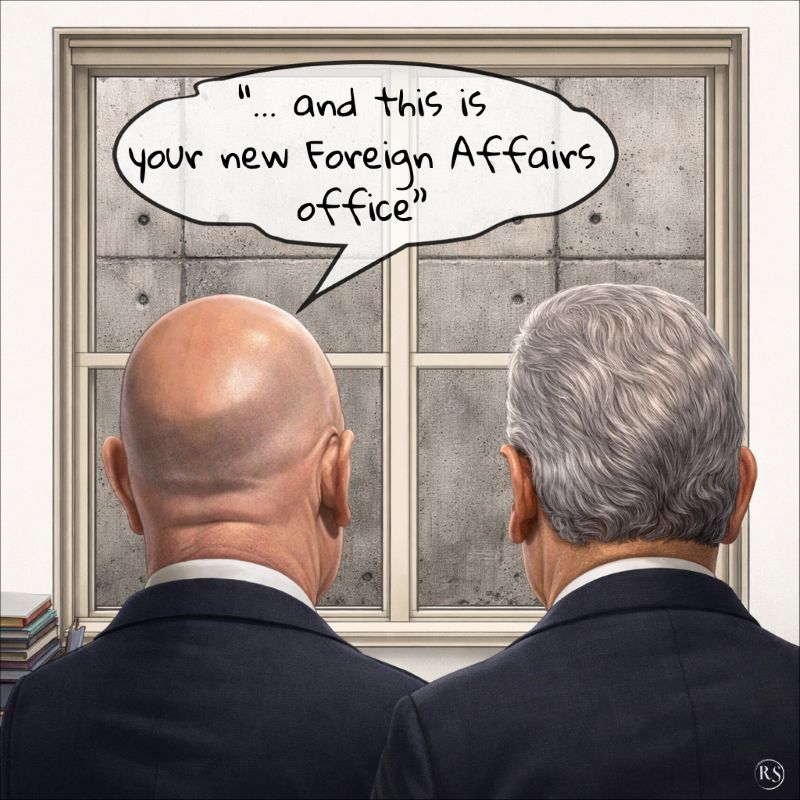
Will the coalition government stay intact until this year’s general election on November 7?
That’s the question being asked by political observers as the National Party and New Zealand First publicly battle to earn support from the same centre and centre-right voters.
Recent political polls have shown NZ First rising at National’s expense and with the general election just six months away, Winston Peters’ NZ First is hoping to increase its share of the vote come November to be in an even stronger negotiating position than it was in 2023.
During the previous general election campaign, the loudest bickering on the centre-right was between Peters and ACT Party leader David Seymour as they each tried to position their parties as the biggest of the two minor parties helping to form the next National-led government.
Among the issues National and NZ First strongly disagree on is the recently signed free-trade agreement (FTA) with India. The deal is likely the government’s signature foreign policy and trade achievement over the course of this term. Prime Minister Christopher Luxon says it’ll lead to more jobs and higher incomes for Kiwis.
“The benefits of this FTA are widespread, and our business community is excited to see the doors of opportunity open to 1.4 billion people whose economy is set to become the third largest in the world,” he says.
But NZ First has publicly opposed the agreement. Deputy leader Shane Jones dismissively said signing it would lead to “unfettered immigration” and a “butter chicken tsunami coming to New Zealand”.
That drew a backlash from National deputy leader and Finance Minister Nicola Willis, who described Jones’s comments as “race-based scaremongering”. She said his remarks had offended Kiwi Indians who are “hurt and feel betrayed”.
It’s obviously unusual for MPs from two government parties to get stuck into each other publicly in such a way but shows National is keenly aware it’s bleeding support to NZ First.
Most government policy disagreements are dealt with behind closed doors, but the scrap between National and NZ First is playing out in the news media now due to timing.
Two other situations on which National and NZ First have disagreed were Luxon calling a confidence vote on himself in a recent party caucus meeting. He did that following weeks of public speculation about his leadership of the party. Following Luxon winning that leadership vote, Peters (a former Hunua MP) told Radio New Zealand that Luxon should have told him about the vote being held beforehand.
Peters also said it was unprecedented for Luxon to call a confidence vote on his own leadership and it would have consequences.
And, a recent release of emails has revealed Luxon and Peters appear to have disagreed on how the New Zealand Government should position itself in relation to the war against Iran by the United States and Israel.
The emails, released by Peters’ office to the New Zealand Herald under the Official Information Act, are reported to show Luxon wanted the government to express support for the war against Iran shortly after it began in late February.
But Peters and his staff disagreed with that position. Political and media commentators suggest Peters’ office releasing the emails was done for political purposes. Tying Luxon to support for a war that has led to rising inflation and oil and fuel prices is a smart move for NZ First.
With six months until the general election, National, NZ First and ACT will all be jockeying for position with the voters while also being careful to avoid looking like they’re trying to destabilise their own coalition government.