


|
Getting your Trinity Audio player ready...
|
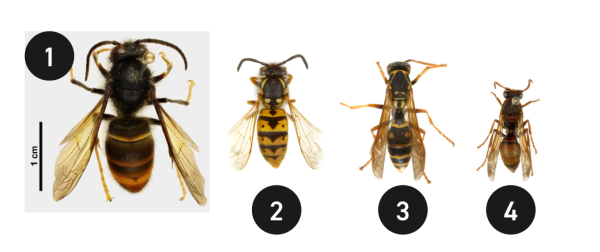
Auckland residents are being urged to keep an eye out for the invasive Yellow-Legged Hornet this summer.
Despite no sightings in the Franklin area, Biosecurity New Zealand urges people to be vigilant and asks anyone who sees the hornets or their nests to notify them immediately.
Chair of the policy, planning and development committee, Councillor Richard Hills, wants all Aucklanders to be on the lookout for any signs of insects in their area.
“We’re grateful that the MPI has accepted our support to assist this work as they lead the response in tackling this invasive insect.
“While we’re hopeful the area is contained to the North Shore, we cannot be sure. So, we encourage all Aucklanders to be on the lookout for these hornets in and around their homes and on their walks through our reserves and native bush.”
Kaipātiki local board chairperson Danielle Grant encouraged communities to work with Biosecurity New Zealand and take the risk seriously to help contain the threat.
“Our community has worked hard to restore and protect the natural environment of Kaipātiki, so the detection of yellow-legged hornets is a concern we can’t ignore. These insects threaten the health of our bee populations and could disrupt the balance of our local ecosystems.
“Every report from the public helps experts zero in on where the hornets are active, so if you spot a suspected hornet or nest, please take a photo and report it immediately to Biosecurity New Zealand.”
As well as delivering a painful sting, they also feed on other bees, wasps and flies.
Samantha Hill, the general manager of the environmental services at Auckland Council, echoed Grant by reminding people how important it was to “do our bit”.
“Stay vigilant and immediately report any sightings through to Biosecurity New Zealand. The best surveillance tool we have right now is people reporting any suspected hornets or hornet nests online at report.mpi.govt.nz or by calling the exotic pests and diseases hotline on 0800 809 966.”
The yellow-legged hornet is easily recognisable with its dark legs with bright yellow tips. They are much larger than common warps in New Zealand, and typically have uniformly yellow or yellow-striped legs.
Biosecurity New Zealand has laid out hundreds of traps in areas that are being checked daily, placed up to five kilometres from detections.
To make your own traps, the Ministry for Primary Industries (MPI) recommends 10 grams of yeast, one litre of water, and 400 grams of sugar; you may also add beer.
Yellow-legged Hornets only feed during the day, so to avoid unwanted bycatch, it is recommended to bring traps indoors at night.
If you see a hornet or a nes,t do not attempt to remove or control it; instead, take a picture and report it either online to report.mpi.govt.nz, or by calling the exotic pests and diseases hotline on 0800 809 966.
As of early December, Biosecurity New Zealand has captured 33 queen hornets and removed 17 nests. A total of 4,860 public reports have been made so far.