

|
Getting your Trinity Audio player ready...
|
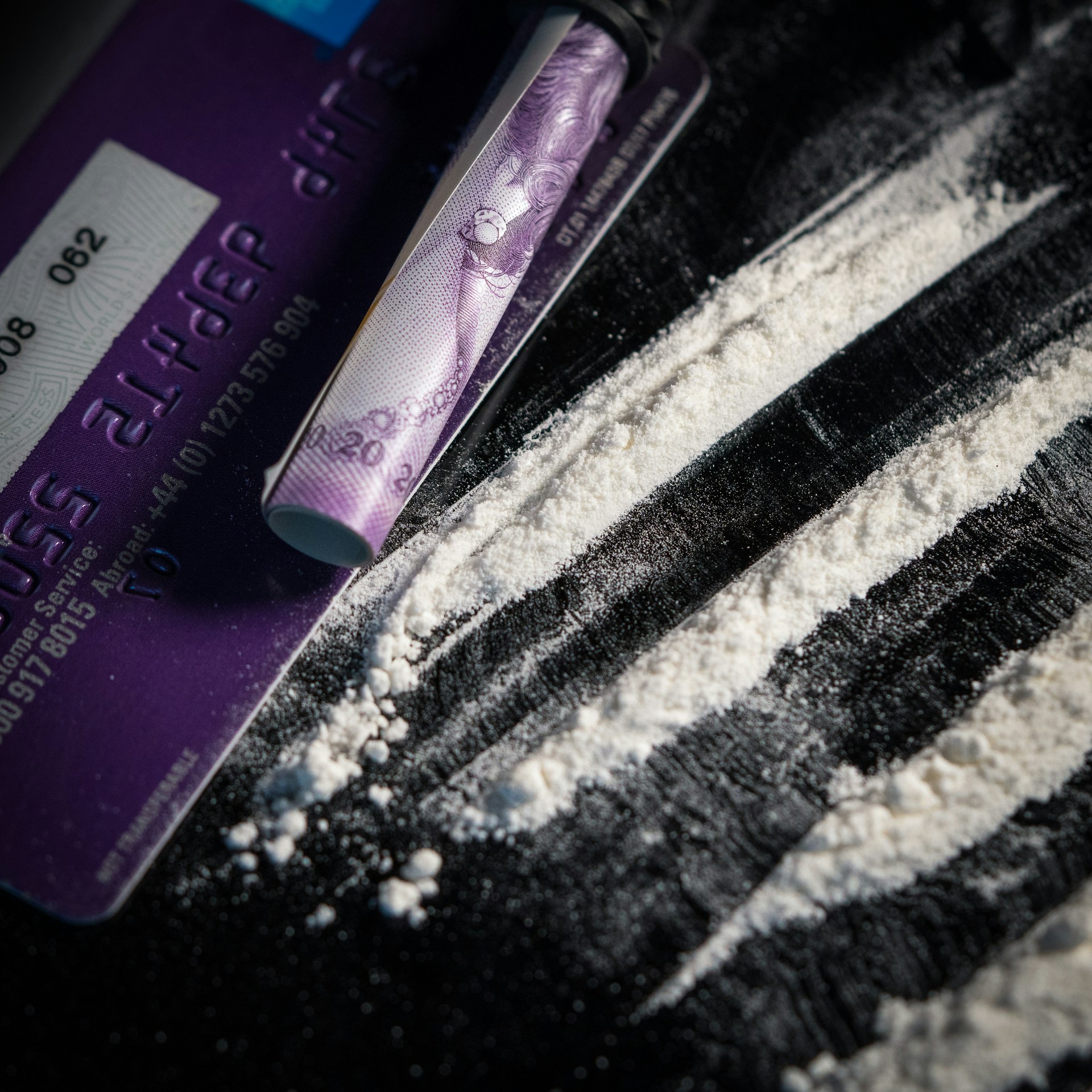
New national wastewater results show illicit drugs continue to carry a heavy toll, with methamphetamine and cocaine use costing New Zealand an estimated $32 million in social harm every week.
The latest Wastewater Drug Testing in New Zealand: National Overview, Quarter Two (April–June 2025) covers about 77 percent of the national population. It found methamphetamine remains the country’s most widely used illicit drug, averaging 29.1 kilograms a week and generating an estimated weekly social harm cost of $30.5 million. Cocaine use, while far smaller in quantity at 4.5 kilograms per week, still carries an estimated $1.7 million in weekly social harm.
Auckland recorded the highest levels of cocaine detected, with wastewater samples showing around 2.5 kilograms consumed each week, well ahead of any other region. The city’s consistently strong cocaine readings indicate a distinct pattern of demand compared with other parts of the country.
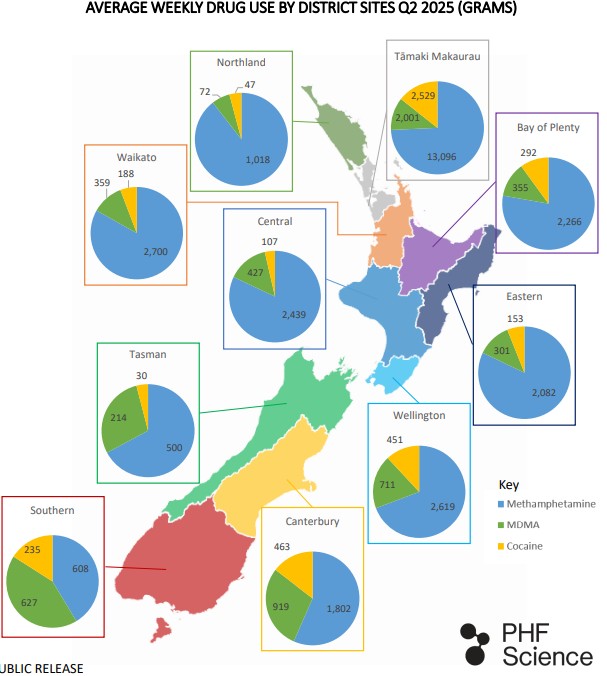
MDMA consumption also declined nationally, averaging 6 kilograms per week, down 16 percent from the previous year’s average. Only Central and Eastern Districts recorded increases. The estimated weekly social harm cost of MDMA use was $1.3 million.
The report, prepared by PHF Science and commissioned by the New Zealand Police, notes the data is not adjusted for population, meaning larger urban catchments like Auckland naturally record higher totals.
Last year’s wastewater findings revealed a sharp rise in cocaine consumption, with 2024 testing sites detecting at least 215 kilograms of cocaine, alongside 1,434 kilograms of methamphetamine and 367 kilograms of MDMA. That equated to an annual social harm cost of $1.66 billion. Both methamphetamine and cocaine use almost doubled compared with 2023, signalling an expanding market for stimulants.
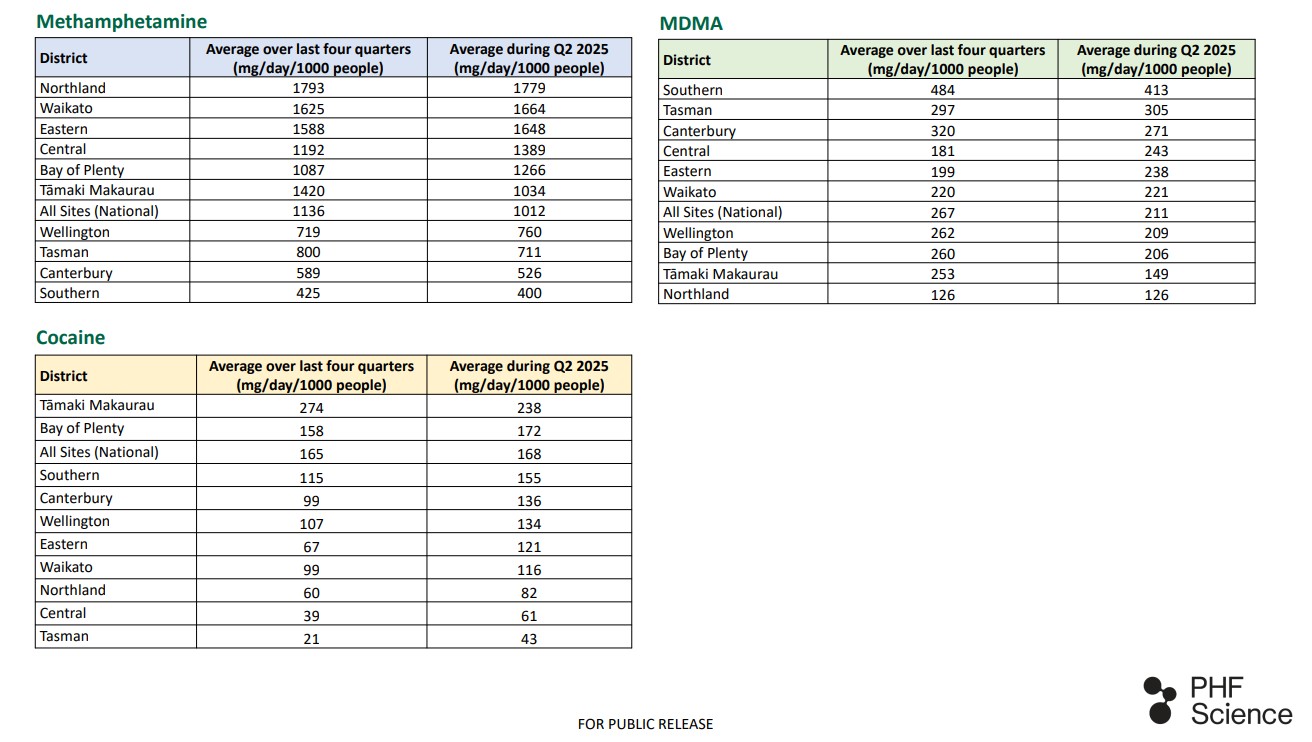
people (mg/day/1000 people). Graph: PHF Science
Daily wastewater data showed cocaine use was largely recreational, but for the first time, average cocaine consumption exceeded MDMA use at some testing sites — suggesting the potential for further growth in demand, particularly in urban centres.
The national wastewater monitoring programme continues to provide one of New Zealand’s most consistent indicators of illicit drug trends, analysing substances detected at treatment plants across all major regions.
The report comes after a spate of arrests in the Auckland and Waikato regions amid a crackdown by police on the supply and use of drugs.
A police spokesperson told the Franklin Times that “methamphetamine consumption continues trending upward, so it is unsurprising that there is an increase in possession of meth charges.
“Often it is the case that people are charged with a variety of offences, and this might include possession of meth or utensils uncovered because of the arrest. Sadly, this once again shows the impact of methamphetamine and the addiction that comes from it driving significant harm.
“New Zealand Police continue to refer people using methamphetamine and other harmful drugs to treatment programmes as well as working with iwi and communities to lessen the impact of this harmful addiction.”
New Zealand Drug Foundation responds
Sarah Helm, Executive Director of the New Zealand Drug Foundation, told the Franklin Times there is an urgent need to strengthen support for people affected by drug use.
“There is more need than ever for accessible harm reduction information and early intervention so that we can help people prevent issues before they arise.
“The sharp increase in cocaine and methamphetamine use recently has happened against the backdrop of long-term under-investment in addiction services, and the sector is now under intense strain.
“We urgently need to turn that around with greater investment in harm reduction and support services,” she says.