


|
Getting your Trinity Audio player ready...
|
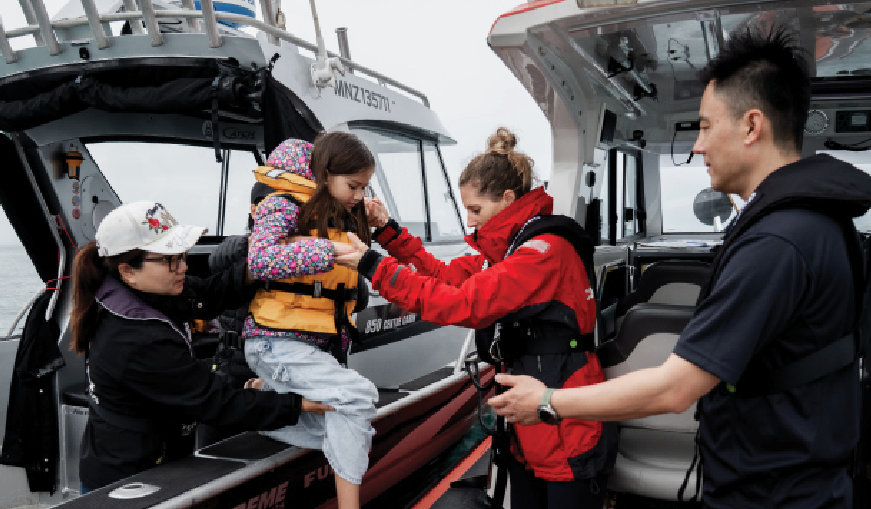
Auckland Council has opened public consultation on proposed changes to the Auckland Navigation Bylaw that would make lifejackets mandatory on recreational vessels six metres and under – a move Coastguard NZ says is long overdue.
The consultation has reignited debate around whether wearing a lifejacket should remain a personal choice or become compulsory in a region where boating fatalities continue to occur.
Coastguard NZ says that last year, Northland, Auckland, Waikato, and Bay of Plenty accounted for 51 of the 78 people who lost their lives to drowning.
A spokesman for Coastguard says New Zealand doctoral researcher Teresa Stanley found virtually nobody could swim beyond 200m in open water conditions once factors like cold shock, current and fatigue were introduced. Compliance in Waikato reportedly increased by around 90 percent after the region introduced stricter lifejacket rules eight years ago.
Under Auckland’s current rules, it is compulsory to wear a lifejacket on any vessel under six metres, unless the person in charge of the vessel gives permission not to wear one.
This is more permissive than neighbouring regions, where life jackets must be worn while the vessel is underway.
During peak boating season from Labour Weekend 2025 to Easter 2026, Coastguard volunteers responded to 1,460 incidents, bringing 3,668 people home to safety.
Auckland’s 3,200 km of coastline includes three major harbours, Waitematā, Manukau, and Kaipara along with everything from sandy surf beaches to islands and sheltered bays.
Rod Frost, of Coastguard Papakura, says the vast majority of incidents involve vessels under eight metres in length.
“We would like to see far more wearing life jackets across the board, even on vessels bigger than six metres. Wearing a lifejacket really does increase your chances of survival – it gives us time to get to you.
“In terms of looking after the lifejackets, you need to check that there’s no damage to them, so that all the straps are working properly, along with any clips and buckles. They shouldn’t have any holes in them, or any bad fading from the sun, basically check they’re in good condition.
“If it’s an inflatable lifejacket, then you need to check the canister at least once a year to make sure that there’s no corrosion on it, no damage, and it’s a good idea to weigh them as well to make sure that they are still full. There’s a weight written on them and you can weigh them with your kitchen scales.”
Lifejackets should be size-appropriate for both children and adults, he says.
“The buckles need to be able to do up, and the lifejacket needs to fit reasonably snug. We often see kids in jackets that are way too big for them, and should they end up in the water with any sort of momentum, then they just slip straight out of them, and it’s worthless.”
Consultation closes on June 7, click here to view the full proposal.
Coastguard callouts July 1, 2025 to March 31, 2026
- Waiuku: 29 incidents with 77 people assisted
- Papakura: 17 incidents with 44 people assisted, and notably, 1 life saved (without Coastguard’s intervention, the outcome could have been tragic)
- Howick: 81 incidents with 227 people assisted