


|
Getting your Trinity Audio player ready...
|
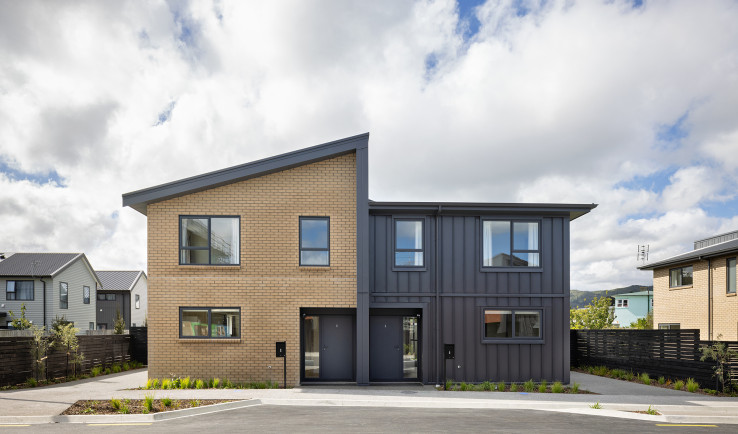
The Government’s new Social Housing Investment Plan arrives at a time when demand for state housing in Franklin continues to grow.
Kāinga Ora says about 140 individuals or families are currently waiting for a home in the Franklin Local Board area.
According to the agency, the wider Waikato region is also experiencing rapid population growth, with high housing need among sole-parent households, older people, disabled people, Māori whānau and, in South Auckland, Pacific families.
The Investment Plan, announced by Housing Minister Chris Bishop yesterday, introduces a data-driven approach to social housing investment, prioritising the “right homes in the right places” and focusing on smaller units, which are in short supply nationally.
While Franklin is not part of the first tranche of target locations, ministers say the needs analysis will be refreshed regularly.
Community housing providers and Māori organisations in the region will be eligible to bring forward proposals from 1 July 2027, when the Government’s new Flexible Fund becomes the primary vehicle for delivering social housing and affordable rentals.
Alongside the national changes, Kāinga Ora continues to expand its local portfolio.
The agency says around 500 new homes are currently planned or under construction across Counties Manukau. One of the most significant Franklin projects is the redevelopment at 172–178 Wellington Street, Pukekohe, where outdated properties are being replaced with modern, warm and accessible homes.
In August, Kāinga Ora outlined its plans to remove five older houses on the Wellington Street site and replace them with 12 new two-storey duplex and stand-alone homes. The mix includes two two-bedroom homes, three three-bedroom homes, five four-bedroom homes and two five-bedroom homes.
All will be built to Healthy Homes standards. The five-bedroom houses will include a ground-floor bedroom and wet-area bathroom, making them suitable for large or multigenerational families and those with mobility needs. The development also includes 22 off-street car parks for residents.
Kāinga Ora said detailed site and traffic management plans were being prepared to minimise disruption during demolition and construction.
The agency advised that work would generally occur between 7am and 6pm Monday to Friday, and 8am to 5pm on Saturdays, with the site closed on Sundays and public holidays. Contractors were instructed to park on-site or in designated roadside areas, and dust, noise and safety controls would be in place throughout the build.
The agency also confirmed that tenants for the new homes would be matched from the Ministry of Social Development Housing Register, with placements prioritising people whose needs align with the size, location and accessibility features of each home.
Kāinga Ora said ongoing support would be available to help new tenants settle in, connect with their communities and understand their responsibilities.
In August, resource consent was pending, with asbestos removal and demolition scheduled for late August, earthworks due to begin in late September, and completion planned for mid-2026.
Earlier this month, Kāinga Ora confirmed that resource consent was approved in August 2025, and asbestos removal and demolition work had since been completed.
It’s build partner, Constructa Ltd, is now progressing with earthworks and drainage installation as construction of the 12 new homes continued. The project remains on track for completion in mid-2026.
Kāinga Ora advises that construction activity will continue between 7am and 6pm Monday to Friday, and 8am to 5pm on Saturdays, with the site closed on Sundays and public holidays. The agency noted that quieter work, such as painting or onsite meetings, may occasionally occur outside these hours.
To reduce disruption, contractors will park either on-site or on the public roadside. Large deliveries will be scheduled outside school drop-off and pick-up times, and concreting of the vehicle crossing is planned for the school holiday period to minimise impact on families.
A formal Traffic Management Plan will be in place whenever work takes place within the road corridor, outlining how safety will be maintained and inconvenience reduced for the surrounding community.