


|
Getting your Trinity Audio player ready...
|
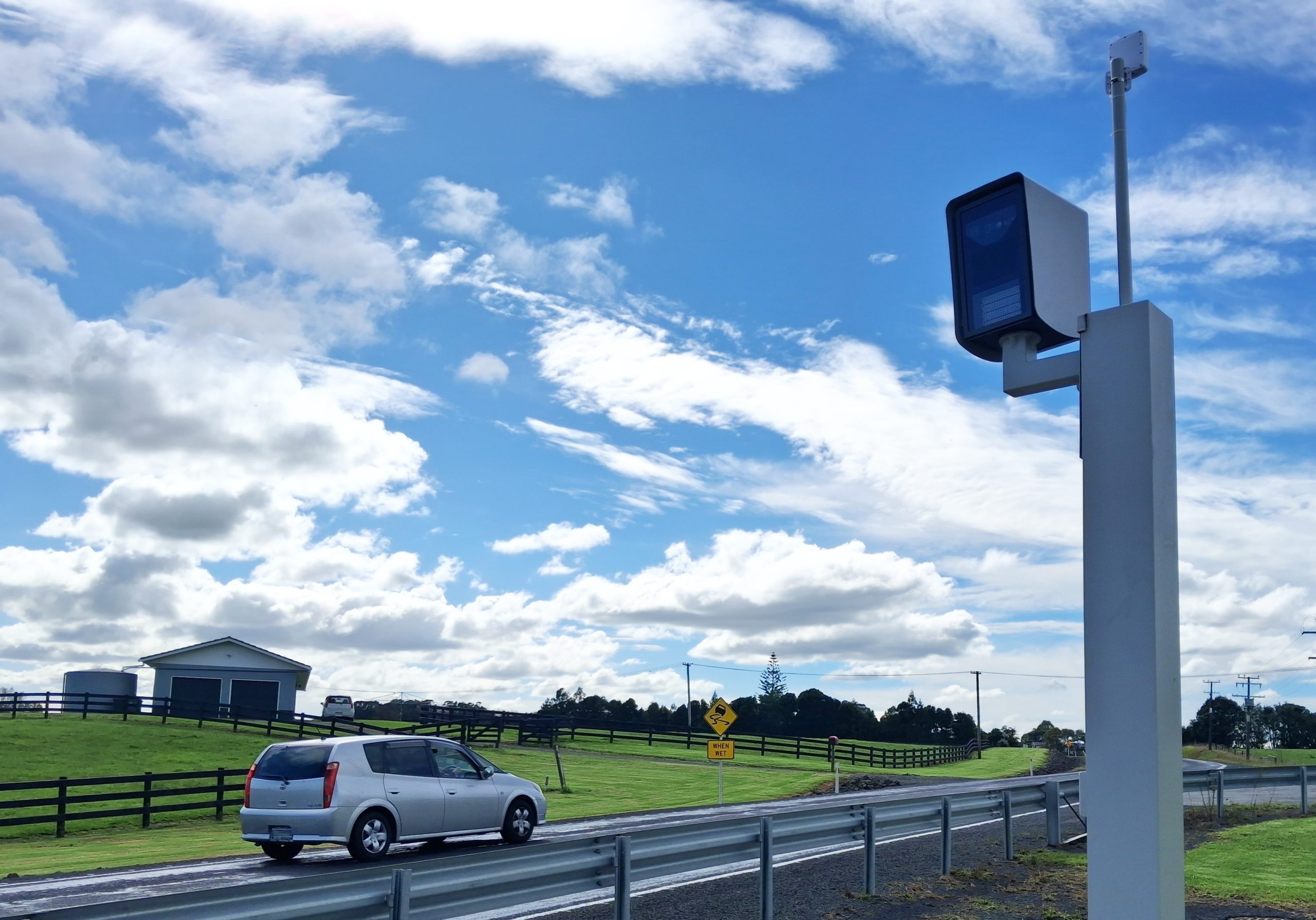
Last week, the New Zealand Transport Agency (NZTA) announced that two sets of average speed safety cameras will be activated on Glenbrook Road between Waiuku and Paerata Rise.
One set is at the eastern end of the road near Karaka, while the other set is at the western end.
In a post on social media, NZTA says they expect to begin issuing fines to people speeding from June 23.
“Exceeding the speed limit is illegal. If you travel at or below the speed limit, you won’t be fined. Average speed safety cameras work by measuring how long it takes you to travel between two cameras along a road.”
The move has drawn ire from road users, including Gary Holmes, who is a member of the Franklin Local Board representing the Waiuku subdivision.
Holmes has released a statement after analysing the full crash history for Glenbrook Road and Glenbrook-Waiuku Road, covering 2000 to 2026 where there were 639 crashes in total across both roads over that period. The date was drawn from NZTA’s publicly available Crash Analysis System (CAS) database.
Total crashes fell from 135 to 104 between the two periods – a reduction that may partly reflect the lower speed limit. But the picture of deaths and serious injuries is far less encouraging. The DSI total (deaths and serious injuries combined) moved from 15 to 17.
“Five years of intensive camera enforcement and over $3.5 million in fines have produced no meaningful reduction in crashes or serious harm. The total crash count is similar. Deaths and serious injuries have not fallen – if anything, the numbers have edged upward, though the small annual totals mean this is not statistically conclusive in either direction.”
Holmes says the most striking finding in the CAS data is the nature of crashes on this corridor. Of the 104 crashes recorded during the camera enforcement era, 68 have road environment factor data recorded. Of those 68, 74 per cent were run-off-road crashes – involving ditches, fences, cliff banks, trees or embankments, 42 per cent occurred in the dark, and most occurred on a sealed road surface
He is calling is calling on Auckland Transport and NZTA to commission a road condition and safety audit of the Glenbrook Road and Glenbrook-Waiuku Road corridor, specifically examining shoulder width, drainage, and roadside hazards.
He also wants the crash data for the corridor since NZTA assumed camera enforcement in late 2024 published, so residents can assess whether the cameras are delivering safety outcomes, and the installation of the new point-to-point camera infrastructure on this corridor postponed until the road condition audit has been completed and its findings made public
“I am not opposed to speed cameras where the evidence supports them. But when nearly three-quarters of your crashes involve vehicles leaving the road, the first question should be: what is the state of the road edge? That question has not been asked. Before we add four more cameras to this corridor, let’s get an answer,” Holmes says.