

|
Getting your Trinity Audio player ready...
|
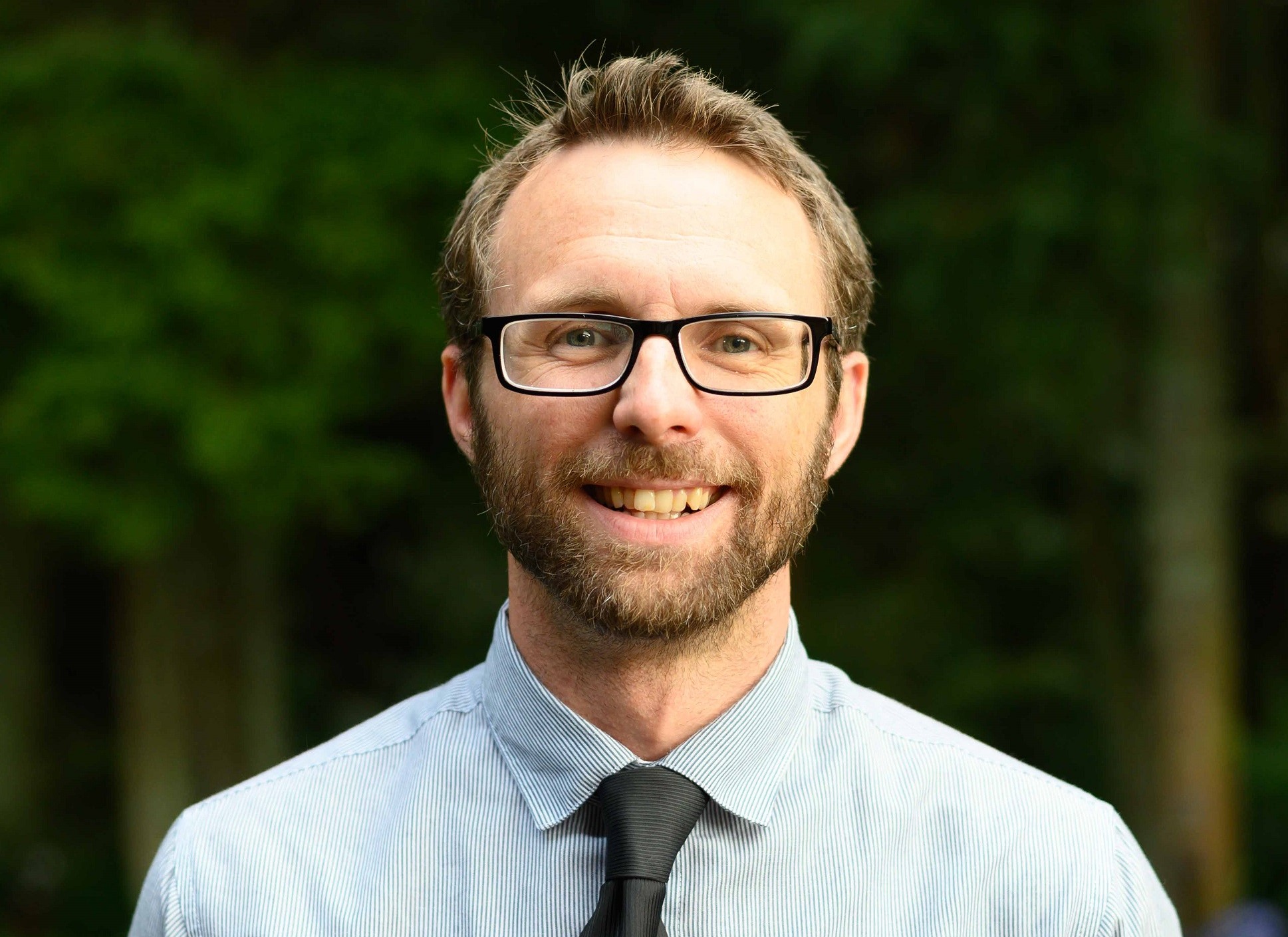
How long have you been an educator, and where did you train?
I’ve been involved in teaching and tutoring for most of my adult life, having taught children piano and clarinet at local music schools, as well as helping students with mathematics and English. However, I began my full-time career as a registered teacher in 2011 after completing a Graduate Diploma in Teaching (Primary) at the University of Auckland.
When did you join Manukau Christian School, and when did you become principal?
Manukau Christian School is the first and only school I have worked in. After finishing my training, my dad, Shane Kennedy, who was principal at the time, asked if I wanted to complete my two provisionally registered years at Manukau. I did — and I have never left!
In many ways, it felt like coming home. I had been a foundation student at the school when it began in 1987 (then called St Andrews Christian School). It was a little surreal to return as a classroom teacher of Year 5 and 6 students, working alongside the first teacher the school ever had. I was also involved in setting up our high school and have taught every year level from Year 5 through to Year 13.
At the end of 2022, our principal, Pete Slaney, moved to Taupō to pastor the Baptist Church there, and I began working as principal in 2023.
What’s the best thing about being an educator and principal?
I got into education because I love teaching, and one of the conditions I had for taking on the role of principal was that I would still get time in the classroom. This year I am teaching Year 13 Statistics and Bible to some Year 9 and Year 12 students.
As I often say to my students, the highlights of my working week are always being with them in the classroom—passing on knowledge and helping them succeed.
What’s special about Manukau Christian School?
Well, it’s in the name, really. We are a Christian school, which means we are seeking to see students become disciples of Christ who will live with Him as their King in whatever they do in life. We welcome children from a wide range of religious backgrounds, but we are very clear that our goal is for each child to leave our school as a disciple of Christ.
Some would say our approach is indoctrination — and I would agree with that.
Indoctrination is about passing on a way of seeing the world. We are very transparent about our goals. But I would also say that all education — state, Christian, Muslim, or otherwise — is about forming souls into some vision of the good, the true, and the beautiful. In that sense, all education is ultimately religious. The question is not whether children are indoctrinated, but which indoctrination they are given. We believe that all the treasures of wisdom and knowledge are found in Jesus Christ, and it is out of this belief that we teach.
Being a private school, what areas do your students come from?
We have students from all over Auckland, as we are not limited by zoning rules. We have even had families enrol from the North Shore. Increasingly, we have also had families hear about our school and move from other parts of Auckland to South Auckland to make transportation more convenient.
Is there anything you’d like improved in the education or school management sector?
This is likely a controversial answer, but I believe there is merit in reconsidering the extent of government involvement in education, particularly in light of the role that competition can play in driving quality, innovation, and responsiveness.
Most of us experience the value of market competition in everyday life. We don’t need state-funded ice cream brands or state-funded gyms. In fact, if we did, the ice cream would likely be inferior, and the gyms would be oversubscribed, poorly maintained, and staffed by people more interested in pay progression than helping customers get fit.
In the real world, competition helps products improve and become more affordable. This same logic needs to be applied to schooling. State-mandated zoning rules allow poorly performing schools to maintain a monopoly on “customers” without the pressure of having to earn them through excellent service and results.
Right now, parents cannot truly choose their child’s school unless they are fortunate enough to live in a good school’s zone or wealthy enough to move into one or pay for a private education.
What challenges come with being a private school?
One of the biggest challenges is keeping education affordable. Because we fund ourselves — teacher salaries, buildings, textbooks, and resources — that money comes directly from our customers: the parents.
We have to offer value to families who could choose a local state school and pay minimal direct costs. In effect, we operate in a situation where our competitor offers the same product — education—but is entirely funded by the government. To survive in that environment, we have to be significantly better than local public schools to justify parents investing in us.
But to be honest, I love that challenge. There’s nothing like a challenge to bring an organisation together and sharpen its purpose. Our strong waiting list is a testament to the fact that parents want what we are offering, even when they could receive a “free” education elsewhere.
How is the relationship between Manukau Christian School and its community?
We have a very supportive parent body and rely heavily on goodwill and word of mouth as our primary form of advertising. Another testament to that support is their generosity.
In 2024–2025, we undertook a major building project for our high school, which, as building projects often do, ran over budget and behind schedule. Despite already paying fees, parents — and even some of our high school students — donated generously to help see the project through.
We have a clear vision to establish an additional school to meet growing demand.
Progressing this vision will require securing significant capital investment and philanthropic support to ensure it is developed sustainably and with excellence from the outset, but we know our parent body will be a huge part in the success of this vision.