


|
Getting your Trinity Audio player ready...
|
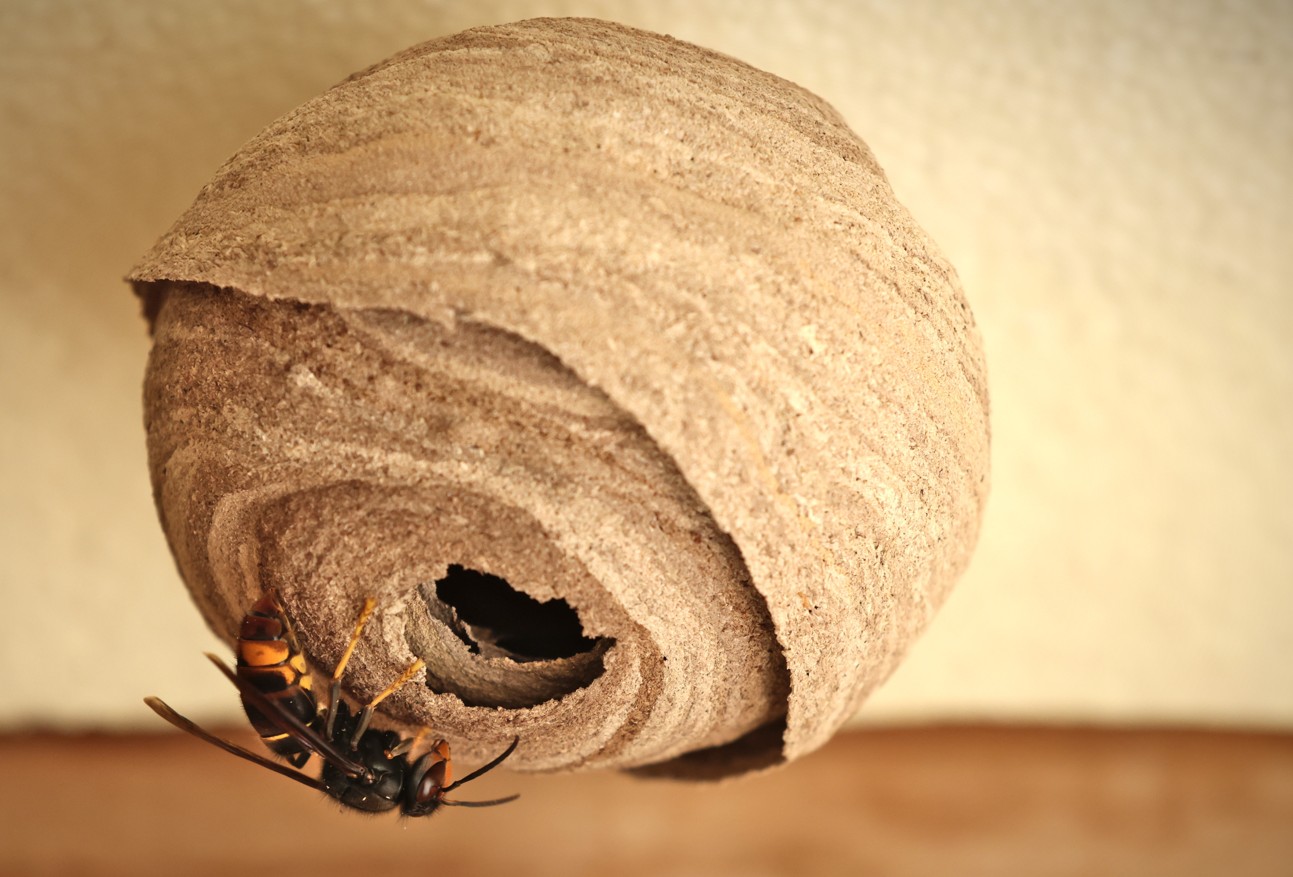
Franklin residents are being urged to stay alert for yellow-legged hornets, but Biosecurity New Zealand says the risk of the invasive pest spreading into the area remains low.
Biosecurity New Zealand says it has now received more than 6,320 public notifications to date, with around 70 percent coming from within the Auckland region. Of those reports, 66 are from South Auckland and 17 from Franklin.
“No queen hornets or nests have been found outside of the Glenfield and Birkdale area on Auckland’s North Shore,” Biosecurity New Zealand Commissioner, North, Mike Inglis says.
“While detections are currently limited to Auckland’s North Shore, we encourage nationwide vigilance, so we have confidence these hornets are not elsewhere.”
Surveillance zone expanded on the North Shore
Biosecurity New Zealand has expanded its formal surveillance zone from 5km to 11km around confirmed detection sites on the North Shore, following advice from an independent technical advisory group.
“This will provide greater assurance that the hornet incursion is a single population contained to the local area and allow us to respond quickly if there has been any spread,” Inglis says.
The enhanced surveillance is already underway, ahead of an expected increase in foraging activity by worker hornets over summer.
More than 575 registered apiaries are now located within the expanded surveillance zone, with Biosecurity New Zealand placing traps near hives and providing beekeepers with guidance on monitoring and identification.
The advisory group has commended Biosecurity New Zealand’s response to date, noting strong progress in locating and destroying hornets and nests.
To date, 34 queen hornets and 22 nests have been located and destroyed.
“The detections show our surveillance is working well,” Inglis says.
What to look for and what not to do
Biosecurity New Zealand is asking the public to check common nesting areas around homes and properties, including roof eaves, sheltered entrances, wooden structures, carports, under decks, sheds and outbuildings.
People are urged not to attempt to remove or control a suspected hornet nest themselves.
“We appreciate that taking photos can be hard, but images are the best method for us to assess the valuable observations made by the public,” Inglis says.
Anyone who thinks they may have found a yellow-legged hornet or its nest is asked to take a clear photo and report it either online at report.mpi.govt.nz or by calling Biosecurity New Zealand’s exotic pest and disease hotline on 0800 809 966.
More information about the response, including a video showing where hornet nests are commonly found, is available at mpi.govt.nz/yellow-legged-hornet-2025