

|
Getting your Trinity Audio player ready...
|
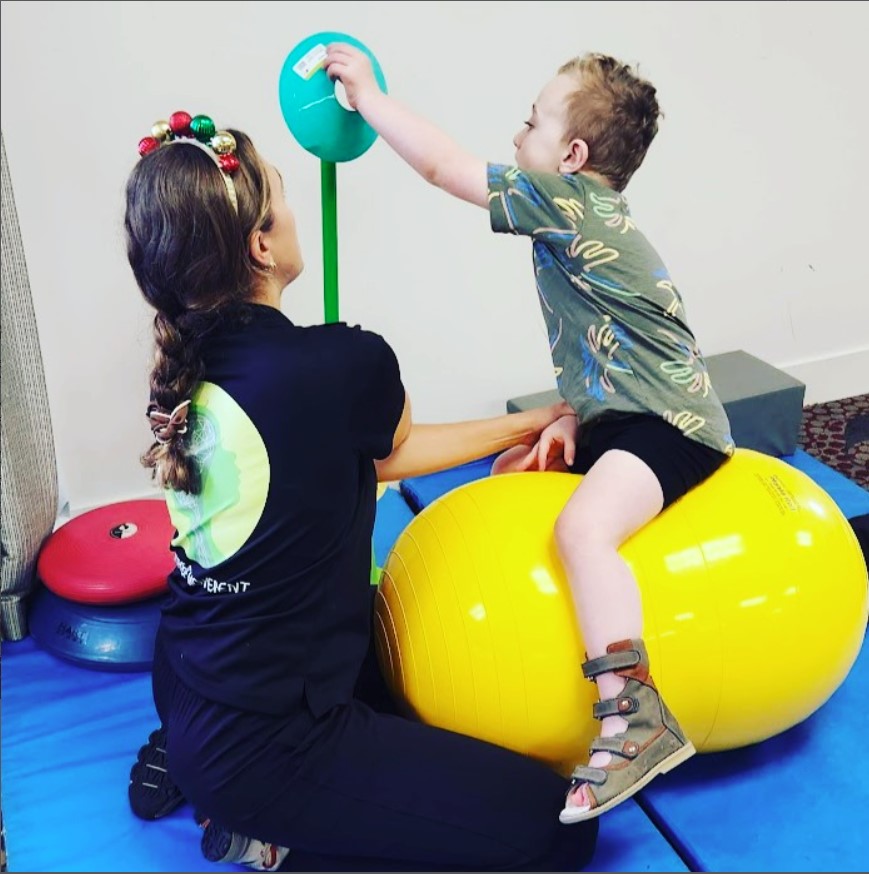
An Ardmore family hopes to access life-changing surgery in the United States for their six-year-old Fletcher.
He was diagnosed with Bilateral Spastic Cerebral Palsy at 10 months old.
Over the years, his family has provided him with as many opportunities as possible through various treatments and therapies. When Fletcher was three years old, his family heard about Selective Dorsal Rhizotomy (SDR) surgery. This irreversible neurosurgical procedure targets leg stiffness by severing specific nerve fibres to improve mobility.
At the moment, it is difficult for Fletcher to cross his legs, to walk or stand safely, and he can only do so with the help of his walker or by holding onto something.
His mother, Cindy Erdos, says the family has tried everything to help Fletcher, including flying out to Australia and travelling down to Rotorua’s Centre of Movement, but feels SDR surgery is their best option.
“By getting him the surgery, we’re hoping that Fletcher will be able to walk independently or at least be safer as he becomes an adult. Our goal is to raise enough money to go over and perform the surgery.”
The treatment will cost more than $120,000 for surgery and related costs.
“There are no pathways funded in New Zealand for this. I’ve tried pathways over in Australia that do the surgery, but currently, New Zealand children aren’t accepted into that programme.
“So, we’re left with the option of travelling to the St Louis Children’s Hospital in Missouri to hopefully provide him with this life-changing opportunity.”
Erdos gave up her full-time position as a teacher at Opaheke School to take Fletcher to appointments and therapy sessions. Her family has also made sacrifices and is unable to do as much as other families can because of Fletcher’s condition. He particularly struggles when the temperatures are really warm.
“A lot of things are inaccessible to Fletcher, which means they (the family) have to make sacrifices for him as well, but with those sacrifices comes an amazing opportunity to learn about cerebral palsy and gives them a perspective that everyday neurotypical children aren’t exposed to,” she said.
Fletcher’s family is hopeful that the surgery will give him a happier life and is buoyed by a Facebook page showing what children with cerebral palsy have achieved after having SDR surgery and have read cases where children have walked independently after the surgery.
Professor Dame Helen Stokes-Lampard, national chief medical officer of Health New Zealand, said it was a case of seeing which patients could benefit the most from SDR treatment, and how to get it to them.
“There are ongoing discussions about who can most benefit from Selective Dorsal Rhizotomy, and how to provide access.
“Considerations involve both the surgical procedure and the very significant pre-and post-surgical rehabilitation required to maximise the benefit of the procedure.
“We encourage families to discuss options with their care team.”
The family hopes to leave for Missouri in March. By February 11, their Givealittle campaign had raised nearly $7000. Donations can be made at www.givealittle.co.nz/cause/fletchers-sdr-surgery-rocketing-to-america.