


|
Getting your Trinity Audio player ready...
|
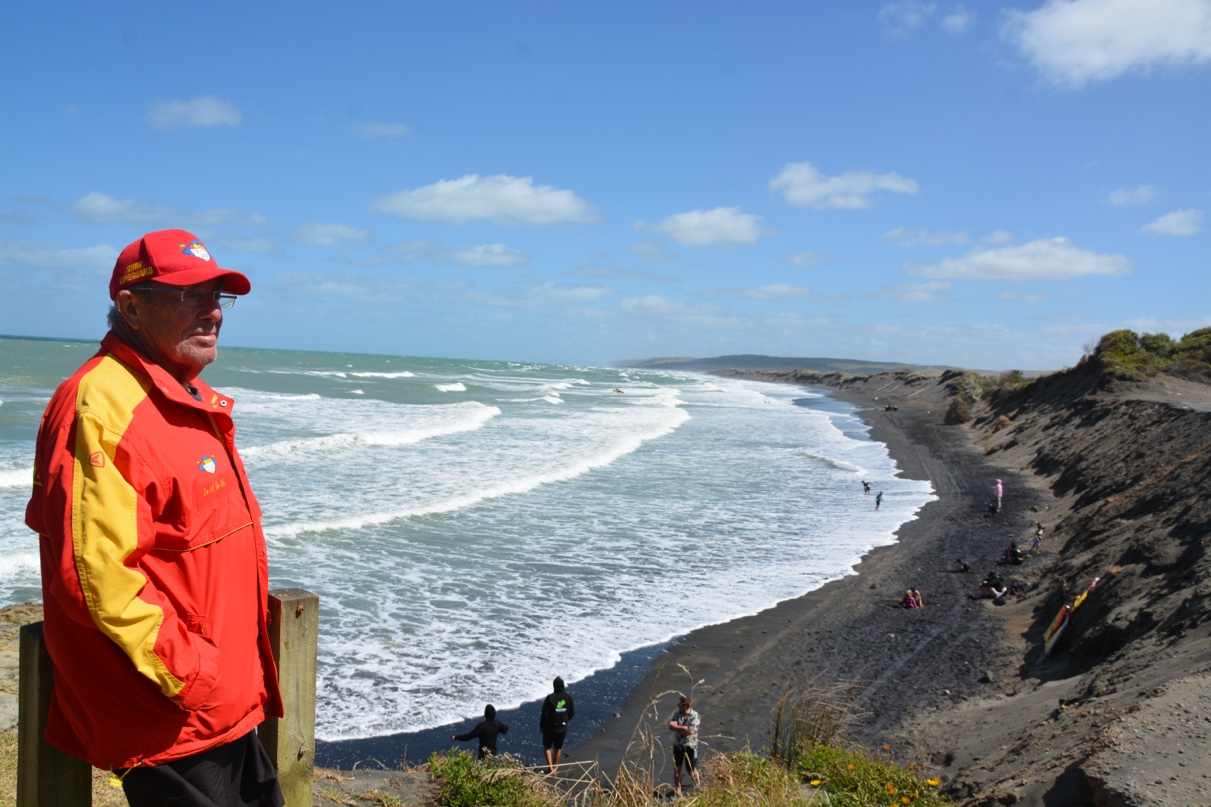
A project to safeguard Port Waikato’s village from coastal erosion has begun.
The Sunset Beach Lifesaving Charitable Trust leads what is thought to be the country’s first
temporary dune restoration project. Starting on February 8, the project is aimed at protecting not only the foreshore but the entire village from relentless coastal erosion.
temporary dune restoration project. Starting on February 8, the project is aimed at protecting not only the foreshore but the entire village from relentless coastal erosion.
The trust estimated 1.5km of the sandspit was lost in the last 12 months. Port Waikato was hit harder than any West Coast surf lifesaving beach, with erosion surging from 1 to 2 metres per year (2000-2012) to 5 to 7 metres per year recently amid fierce waves and vast sand systems.
Trust chair Malcolm Beattie said three years of dedicated work have seen the trust funding the project entirely through its own resources, amid challenges such as king tides decimating car parks, and with two homes lost and others at real risk along beachfront Ocean View Road.
In 2022, the Port Waikato village was facing managed retreat as suggested by the then-mayor.
“The trustees found this completely unacceptable and began what became a three-year process to secure consent.”
Supported by iwi, hapu, Department of Conservation (DOC), Waikato District Council, and
Waikato Regional Council consent has been given to construct the 380-metre, 950-wooden pole “sea wall” which will consist of 4-metre-high, 225mm diameter poles buried 3 metres into the sand, backfilled with sand and locally sourced rocks.
Waikato Regional Council consent has been given to construct the 380-metre, 950-wooden pole “sea wall” which will consist of 4-metre-high, 225mm diameter poles buried 3 metres into the sand, backfilled with sand and locally sourced rocks.
It’s paired with New Zealand’s West Coast-first sand “push ups”, transferring low-tide sand to dune toe, to rebuild buffers against 70-plus metre coastline retreat since 2008-2011.
For the push up, the project will use a digger to excavate a thin layer of sand in the low tide region, load a dump truck, and place it above the high tide area and shape it with a digger.
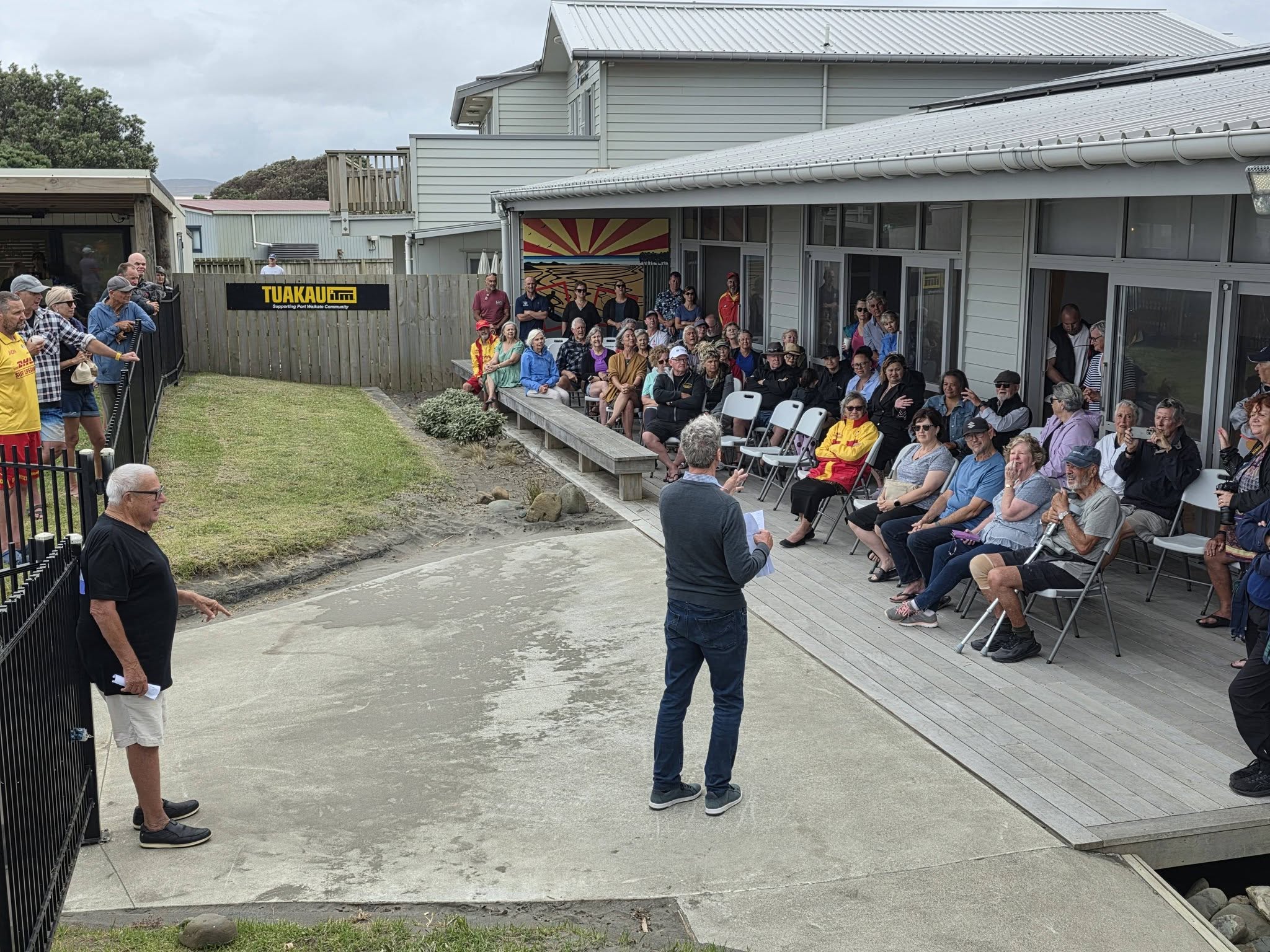
“Today is the day that Sunset Beach Port Waikato demonstrates that resilience and positivity can prevail against negativity. Managed retreat or indeed any type of retreat, is a no-go,” Beattie said.
“We reached this milestone by the very fact that we never gave in.
“Our thanks to Surf Lifesaving New Zealand for their support, to my friend Rereokeroa Shaw, who elicited support from seven marae, and that of Waikato-Tainui. To those Waikato District Council people who understood us, despite others continually building barriers to our success.
“To my fellow trustees, who at all times acted as a team and allowed us the space and creativity to pursue the near impossible. To the community of Port Waikato: thanks for being there, and finally to my fellow lifeguards: thanks for going the extra mile.”
Ngāti Karewa Ngāti Tahinga chairperson Rereokeroa Shaw said as tangata whenua, they
wholeheartedly support this country-first project.
“Because of our relationship with the whenua [land], we know what needs to happen. We have the local knowledge, energy, and commitment to protect our coastline.
“The project is a significant step forward in collaborative, locally-led responses to
climate change and coastal erosion, grounded in mātauranga Māori, community commitment, and environmental responsibility. Paimarie!”
Beattie said the groundbreaking effort to slow coastal erosion addresses homes, reserves, surf club and much-loved community hub/medical centre at severe risk, for long-term resilience under sea-level rise pressures.