


|
Getting your Trinity Audio player ready...
|
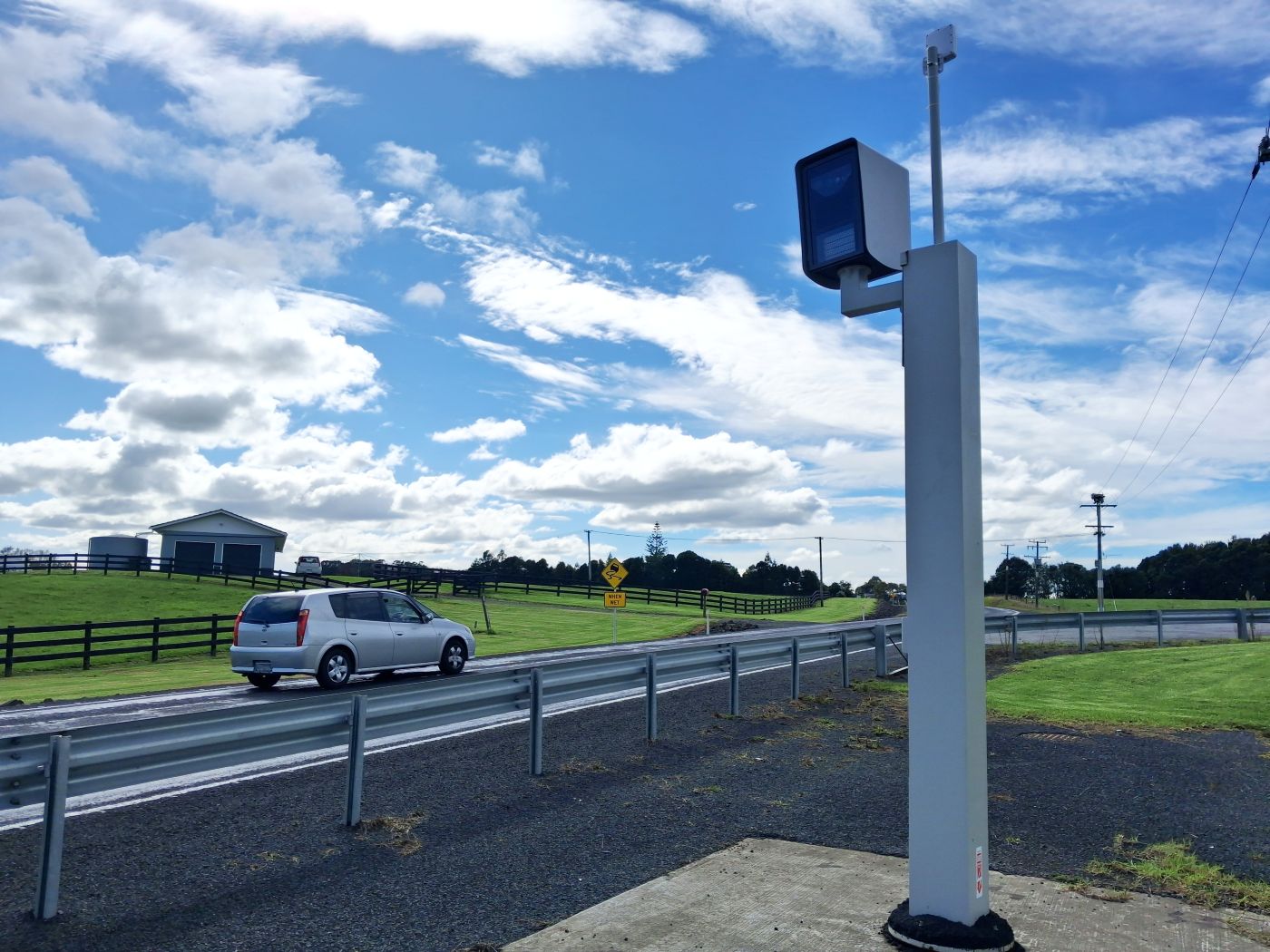
The focus will be on Franklin motorists as the country’s newest average speed safety cameras begin issuing fines.
The New Zealand Transport Agency (NZTA) expects to begin issuing fines to people speeding from June 23 when two sets of average speed safety cameras will be activated on Glenbrook Road between Waiuku and Paerata Rise.
One set is at the eastern end of the road near Karaka, while the other set is at the western end. The stretch of road (officially Glenbrook-Waiuku Road and Glenbrook Road) between the two towns is 19km, with two pairs of average speed cameras and a fixed speed camera.
A spokesperson for NZTA told the Franklin Times that there are recommended distances of 1km in urban areas and 4km in rural zones to ensure effectiveness between fixed cameras, but there are no set distances under regulations.
The move has drawn ire from road users, including Gary Holmes, who is a member of the Franklin Local Board representing the Waiuku subdivision.
Holmes recently released a media statement, calling on Auckland Transport and NZTA to commission a road condition and safety audit of the Glenbrook Road and Glenbrook-Waiuku Road corridor, specifically examining shoulder width, drainage, and roadside hazards.
An Official Information Act (OIA) response Holmes received from police showed more than $3.5 million worth of speeding fines were issued for offences on Glenbrook Road in the past five years, from 2020 to 2025.
Holmes says the overall sentiment from the wider Waiuku community is bewilderment at why there is such a concentration of cameras along a small number of roads around the town.
“I think it hasn’t helped that the speed limit has dropped, and there really hasn’t been much of a change in the actual number of injuries or serious injury crashes.”
Holmes analysed the full crash history for Glenbrook Road and Glenbrook-Waiuku Road, covering 2000 to 2026, where there were 639 crashes in total across both roads over that period. The date was drawn from NZTA’s publicly available Crash Analysis System (CAS) database.
Total crashes fell from 135 to 104 between the two periods – a reduction that may partly reflect the lower speed limit. But the picture of deaths and serious injuries is far less encouraging. The DSI total (deaths and serious injuries combined) moved from 15 to 17.
Holmes also wants the crash data for the corridor since NZTA assumed camera enforcement in late 2024 published, so residents can assess whether the cameras are delivering safety outcomes, and the installation of the new point-to-point camera infrastructure on this corridor postponed until the road condition audit has been completed and its findings made public
“I am not opposed to speed cameras where the evidence supports them. But when nearly three-quarters of your crashes involve vehicles leaving the road, the first question should be: what is the state of the road’s edge? That question has not been asked. Before we add four more cameras to this corridor, let’s get an answer,” Holmes says.