


|
Getting your Trinity Audio player ready...
|
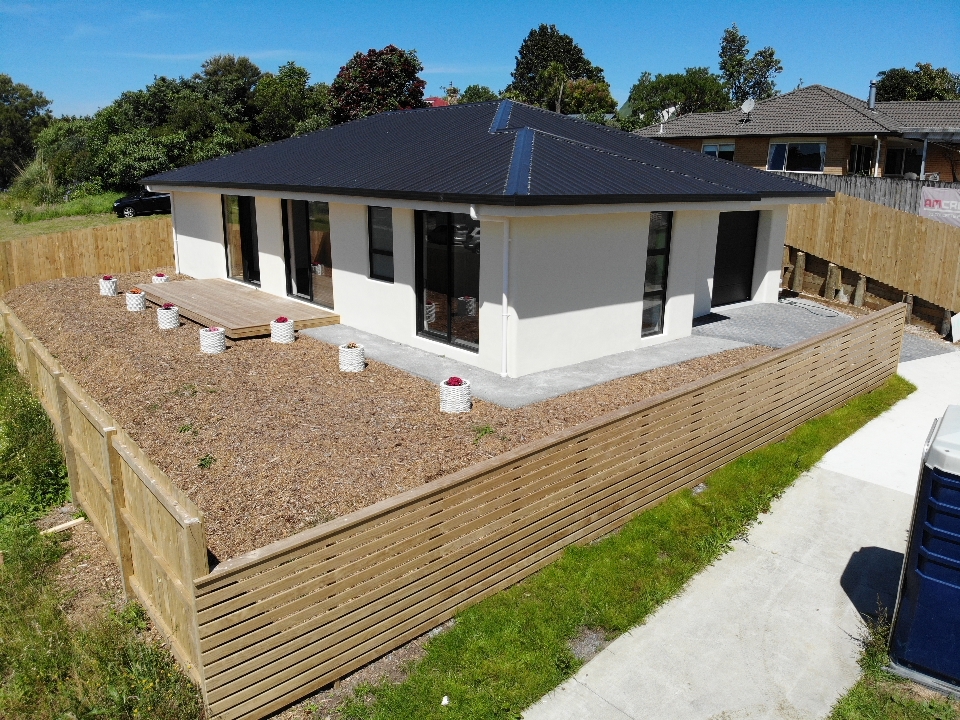
Amcrete has finished its first 3D printed house in Waiuku, showcasing what future homes might look like.
3D-printed homes represent one of the most significant innovations in construction technology in maybe the last 50 years and show the advantages in terms of durability and comfort compared to the average home.
The show home in Waiuku is a standard single-storey, four-bedroom plus study and two bathrooms, with a plastered, textured finish on the outside.
The interior walls have been finished with lime plaster, which offers significant health benefits, including antifungal and antimicrobial properties. It keeps air quality higher than with regular acrylic paints, which act like plastic and prevent the walls of the house from breathing.
The house also used Natural Paints, a local company that offers all-natural paints with no emissions or harmful vapours and carries a 25-year warranty.
The open home demonstrates that the technology works and gives people an idea of what they can expect from 3D-printed dwellings in the future.
From the buyer’s point of view, it’s like an average house, from a design perspective.
Once the design is agreed upon, they create a digital model of the house, which is converted into code for the 3D printer, and the printer slowly executes the code, building the house.
The only limitation is the layout’s size, which is governed by the printer’s printing area: 10 and a half metres by 16 and a half metres, and seven metres high, making a 160–170-square-metre footprint for a single-story house.
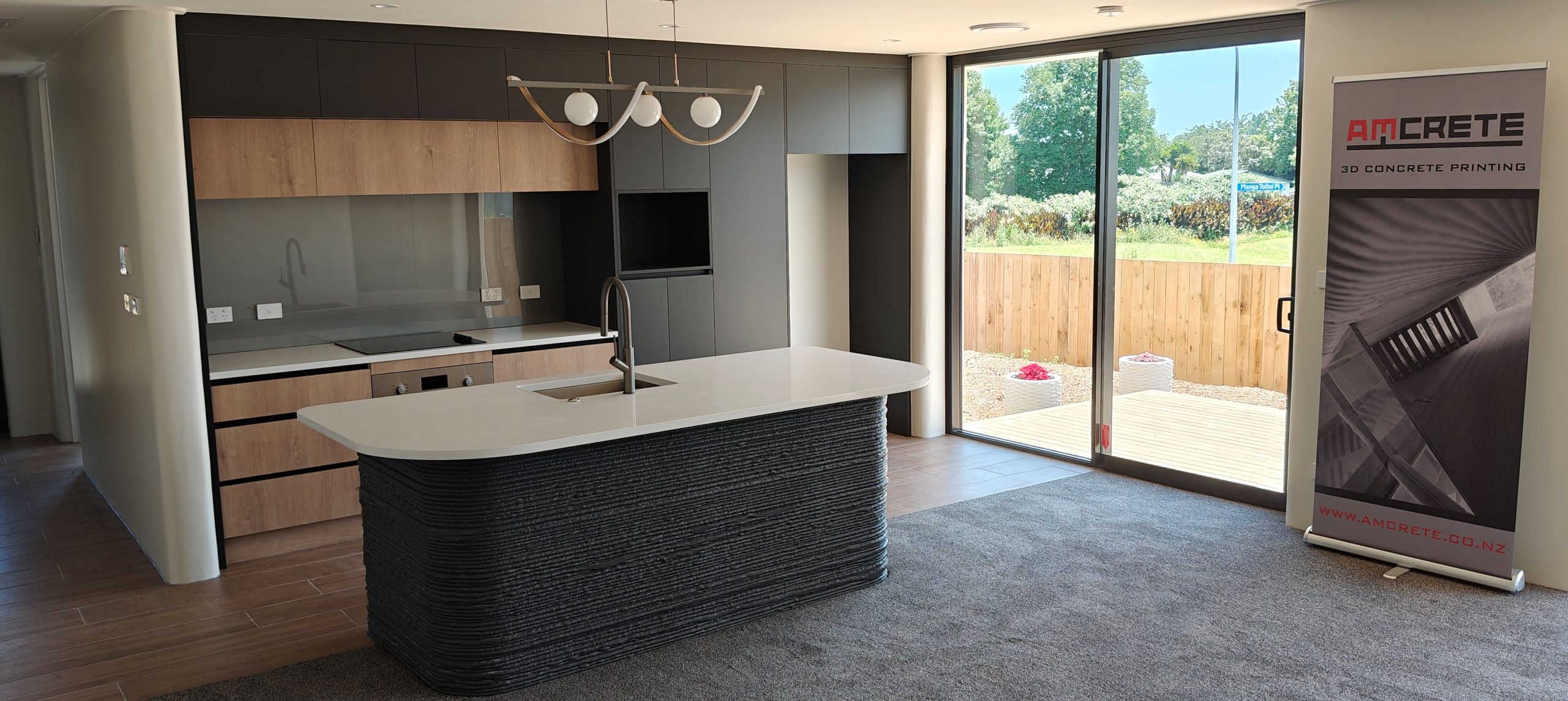
After looking at other 3D building projects overseas, Amcrete director Kirill Ilin thought it was time to start using the technology for their own projects.
“Concrete construction has several advantages over more traditional houses here in New Zealand, and that’s something we want to work on, develop, and make available to the wider public.
“It costs the same as a typical traditional house, but you’ll get four times the value because it’s more durable, it lasts longer, and it has a significant thermal mass. That’s the biggest difference, you’ll notice when you walk into the showroom on a hot day, it’ll feel very nice and cool inside because the temperature doesn’t jump as much.
“The big thermal mass on the walls means that it can maintain a stable temperature whether it’s hot or it’s cold. With a timber house, you don’t have thermal mass to rely on, so if temperatures go up, it gets hot inside, and if it gets cold inside, it gets very cold very quickly in a normal house.”