


|
Getting your Trinity Audio player ready...
|
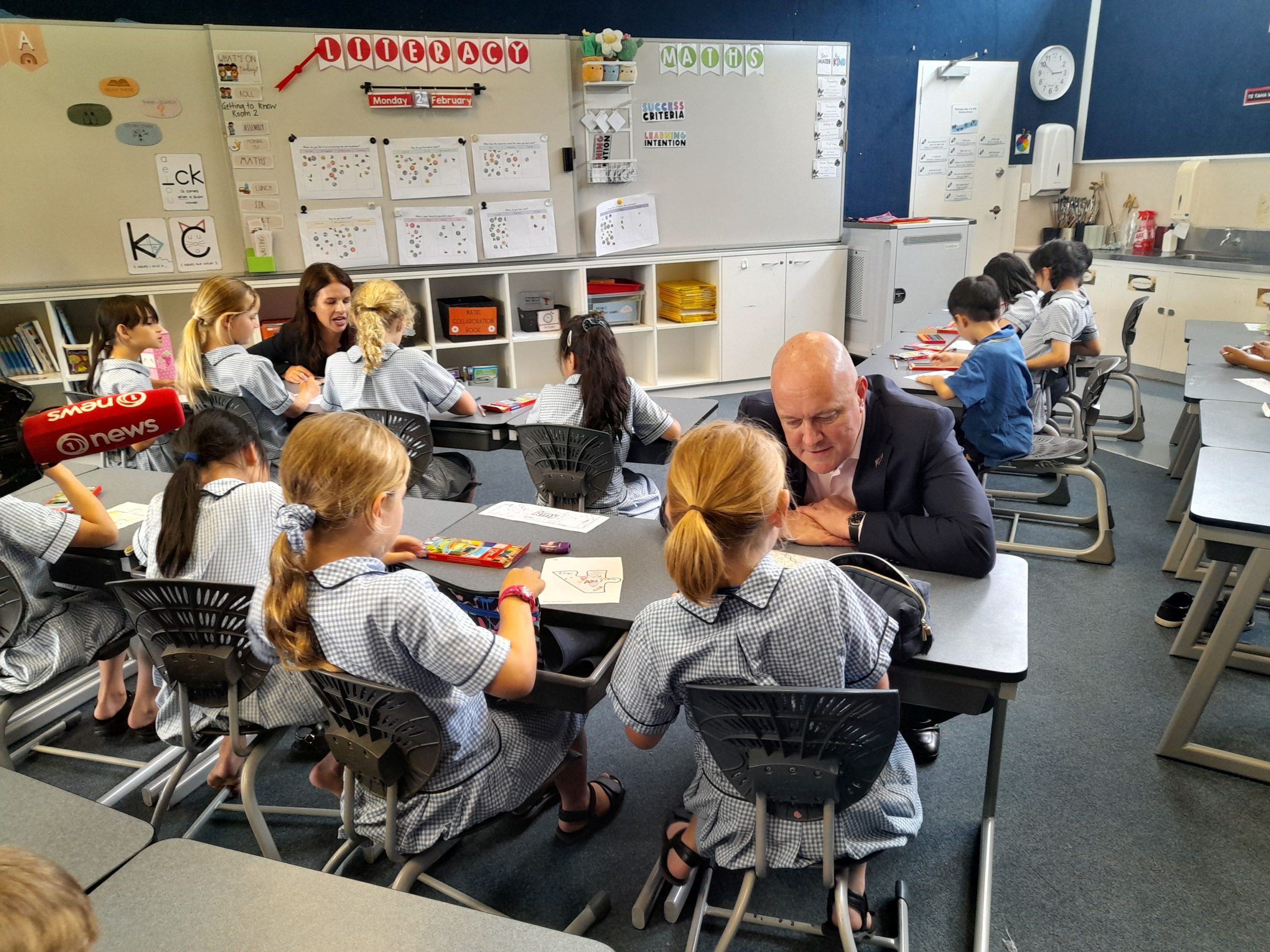
Government Ministers Luxon and Stanford are confident the new education reports system will bring greater understanding for parents of their child’s learning progress, reports PJ TAYLOR.
It was the first day of school for the new education year and report cards were already being discussed – new and old.
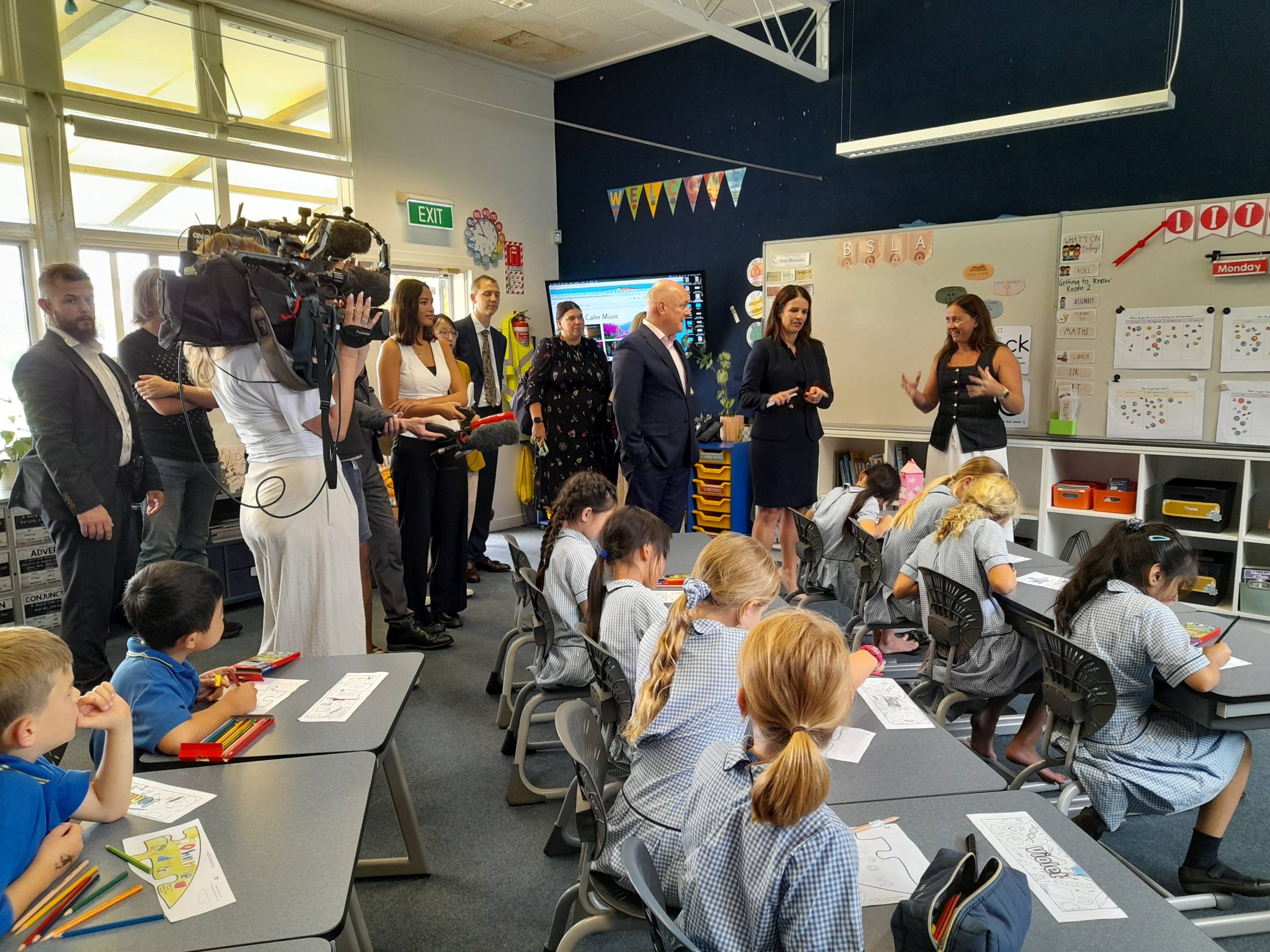
A political and news media commotion swept into Cockle Bay School in East Auckland on a rainy Monday afternoon when Prime Minister Christopher Luxon and Education Minister Erica Stanford arrived for a school tour and announcement of a new reporting system.
The assessment scheme is designed to give parents across the country a more accurate indication of how their children’s learning is progressing, they say.
The Education Ministry’s five new “progress indicators that explain student progress” are: Emerging (Me hāpai ako), Developing (Kua koke whakamua), Consolidating (Whakatōpū), Proficient (Kua tutuki), and Exceeding (Kua hipa rawa).
In days gone by, those grades were A, B, C, D and E.
“Parents have long called for clearer, more detailed reporting on academic achievement, and this new framework delivers that clarity,” says Stanford.
“It supports parents to understand their child’s progress over time and to be active partners in their learning.”
During the media conference, the Times asked Stanford how she and the ministry decide on the “descriptors”, and whether she feels comfortable that the everyday Kiwi parent is going to understand them.
“It was a job the ministry did – ministry officials and the sector working collaboratively together,” Stanford says.
“It took a while because there were lots of different views, of course. But where we landed, everybody that we worked with was happy.
“If you look at what we have now in the many reports I’ve seen, they’re not very detailed.
“There’s a key to explain what each descriptor means. Without doubt, it will take parents time to get used to the new reporting, but it’s more detailed, more comprehensive, giving a far greater picture of their children’s success.
“Far too often I hear from parents, for example, their child goes to high school, and they find out from the high school teacher that their child didn’t know their [maths] times tables. With this detailed reporting, they will now know.”
For Luxon, the local Botany MP, it was a return to the primary school he attended as a child.
In a light-hearted moment towards the end of the visit and media question time, Cockle Bay School principal Dorothy Bigwood read out Luxon’s old report cards from his time there.
They reflected a hard-working, energetic and enthusiastic student.
Of the Government’s education focus, Luxon says: “National has been working incredibly hard to get our schools back on teaching the basics brilliantly so we can set up our kids for a better future.
“When we entered office, half of our kids weren’t at school regularly. We had 80 per cent of our 13-year-olds where they weren’t meant to be in maths, and half where they didn’t need to be on reading.
“In just two short years, we’ve achieved a huge amount. We’ve mandated an hour a day on maths, ready and writing. We’ve banned cell-phone use and stopped open-play classrooms.
“We’re refreshing the English and maths curriculums, so our children are learning the fundamentals of those subjects each year.
“And we’ve mandated structured literacy in all primary schools, an evidence-based approach that’s paying some huge dividends for us.
“The results speak for themselves. Fifty-eight per cent of our new entrants are now at our or above reading expectations, up from 36 per cent, and the number needing more support has decreased from 52 per cent to 33 per cent.
“There is no doubt about it, education is a critical part of our future going forward in New Zealand,” says Luxon.
“Building a world-class education system is absolutely critical for us achieving a step-change in the New Zealand economy, but also enabling investment in digitalisation, technology, and ultimately creating the higher-paying jobs we all wish to see and experience so we can lift our collective quality of life.
“We’re super excited for the Kiwi kids’ futures, and it’s an important part of our programme to take parents along the journey with us,” says Luxon.
Stanford explains that 2026 signals “the first year of nationally consistent assessment and reporting in primary and intermediate schools, giving parents a clearer picture of their child’s learning and progress, no matter which school they attend”.
“Schools will begin using a nationally consistent reporting approach supported by twice-yearly progress check-ins,” she says.
“Together, these changes will ensure parents receive reliable, easy-to-understand information about progress in reading, writing and maths, alongside attendance information and guidance on next learning steps.
“Parents are key partners in their children’s learning. To play that role well, they need information that is consistent, meaningful, and comparable over time.
“The changes respond directly to expert advice and long-standing concerns about assessment and reporting.
“For years, the Education Review Office (ERO) and the New Zealand Assessment Institute (NZAI) have called for improved assessment practices and higher-quality reporting to parents.
“For too long, New Zealand has lacked consistent, reliable information on how students are progressing in the basics,” Stanford says.
“Both ERO and the Assessment Institute have been clear that without nationally consistent assessment and reporting, parents can be left without the information they need, and the system cannot respond early when children need support. We are acting on that advice.”
Under the new reporting framework, parents of students in years one to 10 will receive nationally consistent reporting across reading, writing and maths.
The second part of the change is the introduction of twice-yearly progress check-ins for students in Years 3 to 8, supported by a new SMART progress monitoring tool.
“The SMART tool is a low-stakes, light-touch way to support consistent assessment,” Stanford says.